Protein calculator
Get a daily protein target for your body weight and goal, the same target BodyPlan sets when it builds your macros.
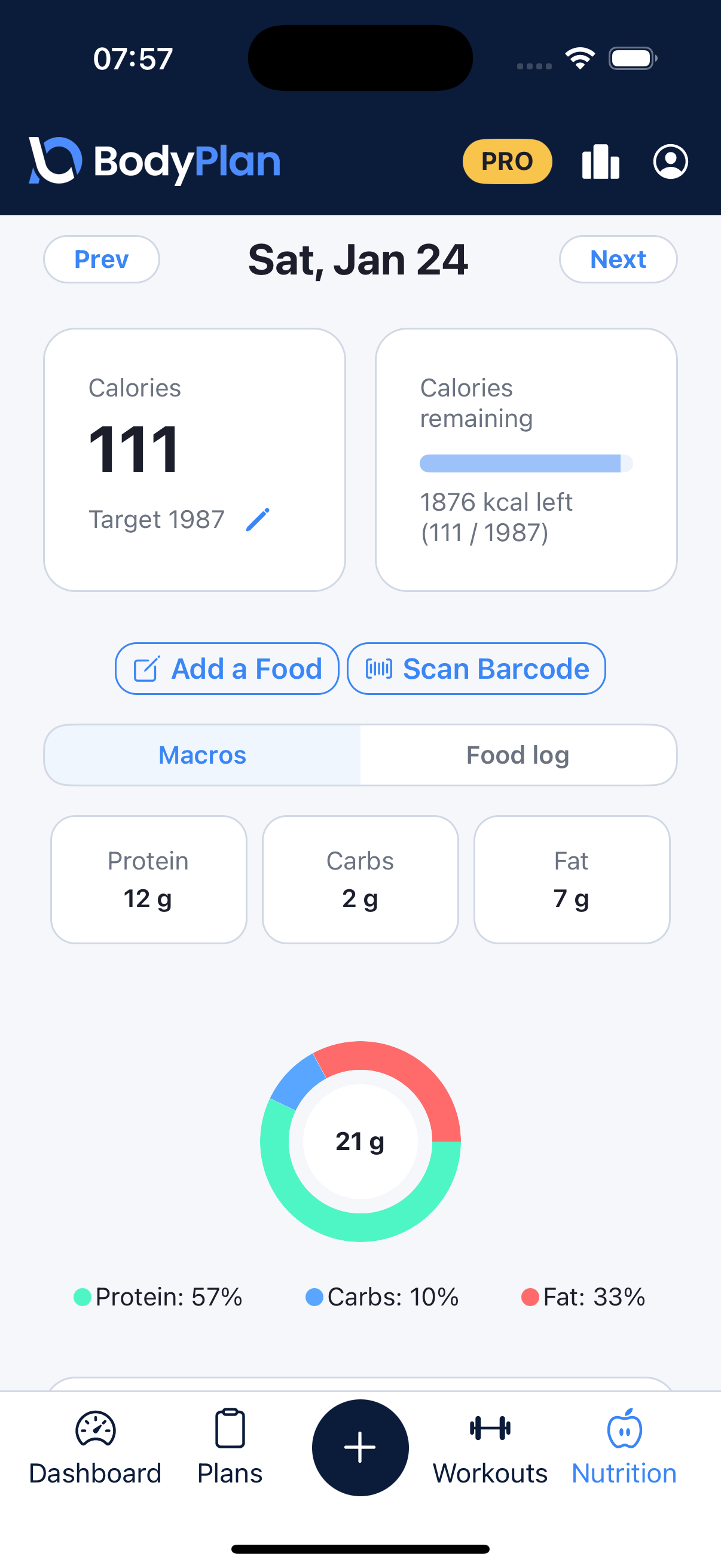
This is a target, not a threshold. Landing anywhere in the supporting range across the week matters far more than hitting an exact number on any given day. The range reflects intakes supported by the ISSN position stand on protein and exercise for people doing resistance training.
How this is calculated · sources
Your target is grams per kilogram of body weight, set by your goal and held inside the 1.4-2.0 g/kg/day range the ISSN position stand supports for exercising adults. It's the figure BodyPlan aims for when it sets macro targets in the app, where protein is also kept within the 10-35% of calories the Dietary Reference Intakes set.
- ISSN position stand: protein and exercise Recommends ~1.4-2.0 g/kg/day for most exercising individuals. BodyPlan aims for this within the DRI range above, so on a low calorie target protein can sit below it.
- Protein supplementation and resistance training: meta-analysis Meta-analysis suggests gains plateau around ~1.6 g/kg/day.
- Nutrition and Athletic Performance (DC/AND/ACSM) Athlete carbohydrate tiers (g/kg/day), protein 1.2-2.0 g/kg/day, and fat 20-35% of energy.
- Dietary Reference Intakes: Macronutrients (AMDR) AMDR ranges and RDAs for adults and children. Every BodyPlan macro target stays inside them: protein at least 0.8 g/kg (RDA) and 10-35% of calories, fat 20-35%, and carbohydrate at least 130 g (RDA) and 45-65%.
Track your protein in BodyPlan
Protein is the macro people miss most, usually because logging it is a chore. BodyPlan makes it quick: search a large food catalog, scan a barcode or photograph your meal, and it shows your protein against this target as the day goes on.
- Daily protein tracked against your target
- Real-world serving sizes, not per-100g guesses
- Barcode and photo logging so it takes seconds


Free to download. No account needed to start.
How much protein you actually need
For adults doing resistance training, the evidence supports roughly 1.4 to 2.0 grams of protein per kilogram of body weight per day. Below that range, muscle gain and muscle retention suffer. Above it, the additional benefit is small enough to be hard to detect.
Your target here is set from your body weight and goal using the same protein logic BodyPlan applies when it builds your macro targets in the app. The app also keeps protein within the 10-35% of daily calories the Dietary Reference Intakes set out, so on a low calorie target the figure you'd see after installing can be lower than this one.
Why your goal shifts the target
Losing fat
In a calorie deficit your body is more inclined to break down muscle for energy. Higher protein, combined with resistance training, is the main lever for keeping more of the weight you lose as fat rather than muscle. Protein also has the largest effect on fullness of the three macros, which makes a deficit easier to hold.
Building muscle
Building muscle needs enough protein to supply the raw material, but in a calorie surplus you're not fighting muscle loss at the same time, so the target sits slightly lower than it does during a deficit, with the extra calories doing part of the work.
Maintaining
A moderate intake supports recovery from training and holds onto the muscle you have, without crowding out the carbohydrate that fuels your sessions.
Spreading it through the day
Total daily protein matters most. That said, spreading it across three or four meals rather than loading it into one is easier to hit consistently and there's reasonable evidence it suits muscle protein synthesis slightly better.
Want the full picture, including calories, carbs and fat? Use the calorie and TDEE calculator.
Frequently asked questions
How much protein do I need per day?
For people doing resistance training, roughly 1.4-2.0 g per kilogram of body weight per day covers the evidence-supported range. Within it, higher intakes suit a calorie deficit, where protein helps preserve muscle.
Why is the target higher when I'm losing fat?
In a deficit your body is more likely to break down muscle for energy. A higher protein intake, alongside resistance training, is the main lever for keeping the weight you lose closer to fat than muscle.
Can I eat too much protein?
For healthy adults, intakes across this range are well tolerated. The practical limit is that protein displaces carbohydrate and fat, which fuel training, so there's little benefit in pushing far beyond the top of the range.
General nutrition guidance, not medical advice. If you have kidney disease or another condition affecting protein intake, speak to a qualified professional first.